
Quitinasas: la enzima que transforma el control biológico
Una guía científica completa sobre las enzimas quitinasa: qué son, cómo funcionan, por qué superan a los químicos convencionales y cómo Bio-Green Lab las produce a escala industrial a través de Q-100.
Fabricada en Veracruz, México desde 2011. Cuatro concentraciones (Q-10 a Q-100), venta directa a formuladores, distribuidores y grupos de investigación.
- Fabricante directo
- QC de actividad por lote
- Muestras de evaluación
¿Qué son las quitinasas?
Las quitinasas son enzimas hidrolíticas (EC 3.2.1.14) que catalizan la ruptura de los enlaces glicosídicos β-1,4 de la quitina, liberando quitooligosacáridos y, finalmente, N-acetilglucosamina (NAG). Las producen de forma natural bacterias, hongos, plantas, insectos, crustáceos e incluso mamíferos: en cualquier lugar donde la quitina necesita remodelarse, reciclarse o ser atacada.
Dentro del sistema de clasificación CAZy, las quitinasas pertenecen principalmente a las familias de glicósido hidrolasas GH18 (la mayoría de bacterias, hongos, insectos y mamíferos), GH19 (principalmente plantas y algunas bacterias) y GH20 (β-N-acetilhexosaminidasas que completan la hidrólisis hasta monómeros). Esta diversidad funcional es lo que convierte a las quitinasas en una plataforma biotecnológica tan potente.
La quitina: el sustrato
La quitina es un biopolímero lineal de unidades de N-acetil-D-glucosamina unidas por enlaces β-1,4. Es el segundo polisacárido más abundante en la naturaleza después de la celulosa, con una biosíntesis anual estimada por encima de 100 mil millones de toneladas. Pese a esa abundancia, la quitina está prácticamente ausente en mamíferos y plantas superiores, lo que la convierte en un blanco extraordinariamente selectivo.
- Paredes celulares de hongos fitopatógenos (Fusarium, Botrytis, Sclerotinia, Alternaria, Rhizoctonia)
- Cutícula de nematodos y artrópodos (ácaros, garrapatas, insectos, crustáceos)
- Cubiertas de huevos de nematodos y ciertos insectos
- Matriz peritrófica del tracto digestivo de insectos
Atacar la quitina golpea entonces la integridad estructural de plagas y patógenos sin afectar cultivos, ganado ni fauna benéfica.
Mecanismo enzimático
Las quitinasas hidrolizan el enlace β-1,4 entre dos unidades de N-acetil-D-glucosamina. Se clasifican funcionalmente en:
- Endo-quitinasas: cortan enlaces internos al azar en la cadena polimérica, generando quitooligosacáridos de longitud variable.
- Exo-quitinasas: actúan sobre los extremos de la cadena, liberando dímeros (quitobiosa) de forma progresiva.
- β-N-acetylhexosaminidases (GH20): completan la hidrólisis de la quitobiosa hasta monómeros de N-acetilglucosamina.
En sinergia biológica real, estas actividades trabajan juntas para desmantelar la estructura quitinosa del organismo objetivo. El resultado es una falla mecánico-estructural: la pared del hongo pierde rigidez y lisa; la cutícula del nematodo se rompe; el artrópodo no logra completar la muda. No es toxicidad metabólica: es toxicidad estructural, y por eso no se desarrolla resistencia clásica.
Familias y estructura 3D
Visualización científica de la enzima quitinasa
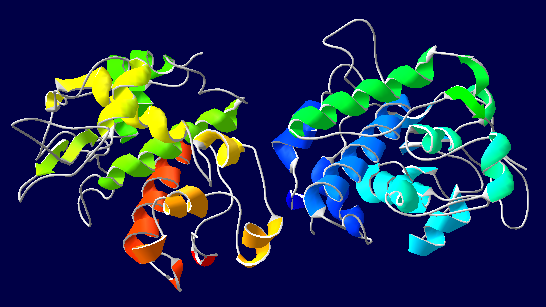
Estructura 3D de quitinasa (plegamiento TIM-barrel)
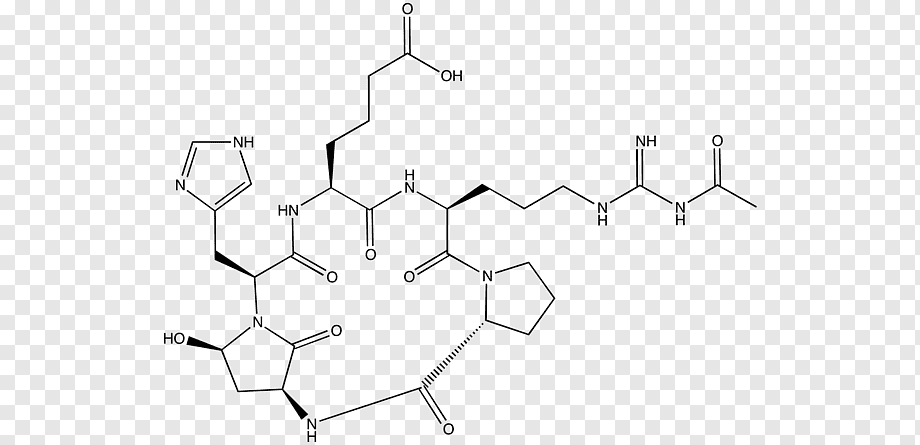
Sitio activo y residuos catalíticos
- GH18: Plegamiento TIM-barrel (β/α)8. Mecanismo retentivo asistido por sustrato. Presente en bacterias, hongos, insectos, mamíferos.
- GH19: Plegamiento α-helicoidal tipo lisozima. Mecanismo invertor. Predominante en plantas y Streptomyces.
- GH20: β-N-acetilhexosaminidasas que liberan el monómero final de NAG.
Aplicaciones biotecnológicas
Agricultura
Control de hongos fitopatógenos y nematodos atacando paredes celulares y cutículas.
Más informaciónPecuario
Acción enzimática sobre garrapatas, ácaros y otros ectoparásitos con exoesqueleto quitinoso.
Más informaciónAvicultura
Manejo ambiental de ácaro rojo y carga fúngica en galpones, sin químicos residuales.
Más informaciónControl urbano
Inteligencia biológica frente a chinches, cucarachas, hormigas y termitas.
Más informaciónBiorremediación
Reciclaje de residuos quitinosos de la industria pesquera en bioproductos de alto valor.
Industria alimentaria
Producción de quitooligosacáridos y N-acetilglucosamina con propiedades funcionales.
Diferencias bioquímicas frente a químicos sintéticos
Producción industrial: Q-100
Q-100 es la quitinasa de grado biotecnológico de Bio-Green Lab, producida mediante fermentación microbiana controlada y purificada para conservar una actividad enzimática estable en solución acuosa. Se ofrece como ingrediente activo en cuatro concentraciones —Q-10, Q-25, Q-50 y Q-100— para adaptarse a prototipado, formulación comercial y aplicaciones industriales de alto rendimiento.
Cada lote se somete a control de calidad por actividad enzimática para garantizar reproducibilidad de desempeño. Q-100 no es un producto terminado: está diseñado para integrarse en formulaciones desarrolladas por socios, clientes e instituciones de investigación.
Suministro, precio y cómo comprar quitinasa
Bio-Green Lab es el fabricante, no un revendedor. El precio de la enzima quitinasa se cotiza por proyecto porque depende de la concentración, el volumen y la presentación que necesitas. Elige la concentración según tu etapa y solicita cotización: respondemos con precio, ficha técnica y condiciones de manejo.
Pruebas de concepto y ensayos de laboratorio
Precio bajo cotizaciónEnsayos de campo y validación en parcela
Precio bajo cotizaciónFormulación comercial de bioinsumos
Precio bajo cotizaciónAplicaciones industriales de alto rendimiento
Precio bajo cotizaciónQué incluir en tu solicitud
- Concentración de interés (Q-10, Q-25, Q-50 o Q-100)
- Volumen estimado y frecuencia de compra
- Aplicación prevista: cultivo, plaga u objetivo de formulación
- País de destino y requisitos documentales
Por qué comprar directo
- Producción propia en Veracruz, México, desde 2011.
- Control de calidad por actividad enzimática lote por lote.
- Asesoría técnica directa con el equipo de laboratorio.
- Muestras de evaluación antes de escalar volumen.
Investigación y referencias
Chitinases: An update
Hamid R, Khan MA, Ahmad M, et al.
J Pharm Bioallied Sci, 2013
Microbial chitinases: potential biotechnological applications
Bhattacharya D, Nagpure A, Gupta RK.
Asian J Pharm Clin Res, 2007
Chitinases for the bioindustry
Yan N, Chen X.
Engineering Life Sciences, 2015
Plant chitinases and their roles in resistance to fungal diseases
Grover A.
J Plant Pathol Microbiol, 2012
Insect chitinases: biochemistry, molecular biology and potential as biopesticides
Kramer KJ, Muthukrishnan S.
Insect Biochem Mol Biol, 1997
Chitin and chitinase: Role in pathogenicity, allergenicity and health
Patil RS, Ghormade V, Deshpande MV.
Int J Biol Macromol, 2000
GH18 and GH19 chitinases: structural and functional diversity
Funkhouser JD, Aronson NN.
BMC Evol Biol, 2007
Chitinolytic enzymes: an overview of recent advances
Adrangi S, Faramarzi MA.
Biotechnol Adv, 2013
Chitinase mediated destructive antagonistic potential
Karthik N, Binod P, Pandey A.
Bioresour Technol, 2015
Trichoderma chitinases and their role in mycoparasitism
Harman GE.
Phytopathology, 2006
Preguntas frecuentes
¿Qué es exactamente una quitinasa?
Una quitinasa es una enzima hidrolítica que cataliza la ruptura de los enlaces glicosídicos β-1,4 de la quitina, liberando quitooligosacáridos y N-acetilglucosamina (NAG). Pertenece a las glicósido hidrolasas (familias GH18, GH19 y GH20).
¿Las quitinasas generan resistencia en las plagas?
No de la manera que lo hacen los plaguicidas químicos. Las quitinasas actúan sobre una estructura física esencial (la quitina), no sobre una ruta metabólica específica. Los estudios asocian esta diferencia a una presión selectiva distinta de la que origina resistencia en plaguicidas químicos.
¿Qué especificidad de sustrato tienen las quitinasas?
Las quitinasas son enzimas biodegradables sin actividad sobre tejidos de mamíferos ni sobre la celulosa vegetal. Su sustrato (la quitina) está prácticamente ausente en plantas y mamíferos.
¿Qué diferencia hay entre quitinasa, quitosano y quitina?
La quitina es el biopolímero estructural; el quitosano es el derivado parcialmente desacetilado; la quitinasa es la enzima que degrada la quitina. Son tres entidades químicas distintas con usos distintos.
¿Pueden combinarse con otros bioinsumos?
Sí. Las quitinasas son altamente compatibles con bacterias y hongos benéficos (Trichoderma, Bacillus), con extractos vegetales y con sistemas de manejo integrado. Siempre se recomienda validar pH y temperatura del tanque de mezcla.
¿Cómo se almacenan?
Refrigeración (4–10 °C), evitando congelación, exposición prolongada a UV o temperaturas mayores a 40 °C. Una solución acuosa estabilizada conserva su actividad por meses bajo estas condiciones.
¿Sobre qué organismos actúan?
Sobre cualquier estructura biológica que contenga quitina: paredes celulares de hongos fitopatógenos, cutícula de nematodos, exoesqueleto de artrópodos (ácaros, garrapatas, insectos) y huevos con cubierta quitinosa.
¿Q-100 está registrado como plaguicida?
No. Q-100 es un ingrediente activo de grado biotecnológico, no un producto terminado. El usuario integrador es responsable de la formulación final y del cumplimiento regulatorio aplicable.
¿Cuánto cuesta la enzima quitinasa?
El precio depende de la concentración (Q-10, Q-25, Q-50 o Q-100), del volumen solicitado y del tipo de presentación. Cotizamos caso por caso: escríbenos con la concentración y el volumen estimado y te enviamos precio y ficha técnica.
¿Cómo puedo comprar quitinasa Q-100?
Directamente con nosotros, sin intermediarios. Puedes escribir por WhatsApp o correo indicando concentración, volumen estimado y aplicación prevista; a partir de ahí definimos muestra de evaluación, cotización y logística.
¿Son fabricantes o distribuidores?
Somos fabricantes. Bio-Green Lab produce la enzima en sus propias instalaciones en Veracruz, México, desde 2011, con control de calidad por actividad enzimática lote por lote.